
Containerized agentic ESP32 development using a test bench proxy
(N.B. This post assumes a very specific environment, specifically macOS. If you’re not on macOS, this may still be of interest as a general approach, but some of the mentioned software isn’t multi-platorm.)
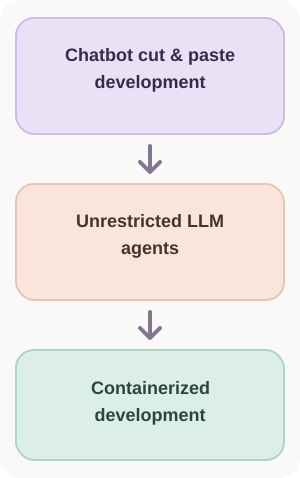
Like many hobbyist embedded developers, I’ve stepped cautiously into LLM-assisted development. First, it was just chatbot copy-and-paste cycles. It worked but it was cumbersome, time-consuming, and the model had no way of controlling tooling and monitoring feedback in real-time. The next step, a huge leap really, was to allow agents to work directly in the development environment. In this step, I would open a codex session in ~/esp and allow it to work there. It was perfectly capable of writing competent ESP-IDF code, flashing the device over USB, and monitoring the process. This would be the end of the migration except for a glaring security issue: