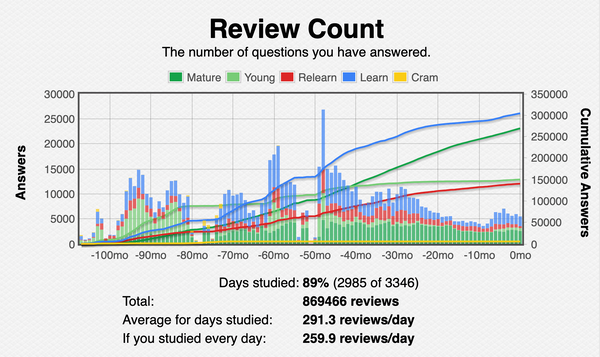
In Part I of my series on my Anki language-learning setup, I described the philosophy that informs my Anki setup and touched on the deck overview. Now I’ll tackle the largest and most complex deck(s), my vocabulary decks.
First some FAQ’s about my vocabulary deck:
- Do you organize it as L1 → L2 or as L2 → L1, or both? Actually, it’s both and more. Keep reading.
- Do you have separate subdecks by language level, or source, or some other characteristic? No, it’s just a single deck. First, I’m perpetually confused by how subdecks work. I’d rather subdecks just act as organizational, not functional, tools. But other users don’t see it that way. That’s why I use tags rather than subdecks to organize content.
- Do you use frequency lists? No, I extract words from content that I’m reading, that I encounter when listening to moviews or podcasts, or words that my tutor mentions in conversation. That’s what goes in Anki.
Since this is a big topic, I’m going to start with a quick overview of the fields in the main note type that populates my vocabulary deck and then go into each one in more detail and how they fit together in each of my many card types. At the very end of the post, I’ll talk about verb cards which are similar in most ways to the straight vocabulary card, but which account from the complexities of the Russian verbal system.